Who we serve Public safety
Websites for fire districts, EMS and emergency management offices.
Residents come to sign up for alerts, get a burn permit, request a report and learn what to do before the next storm.
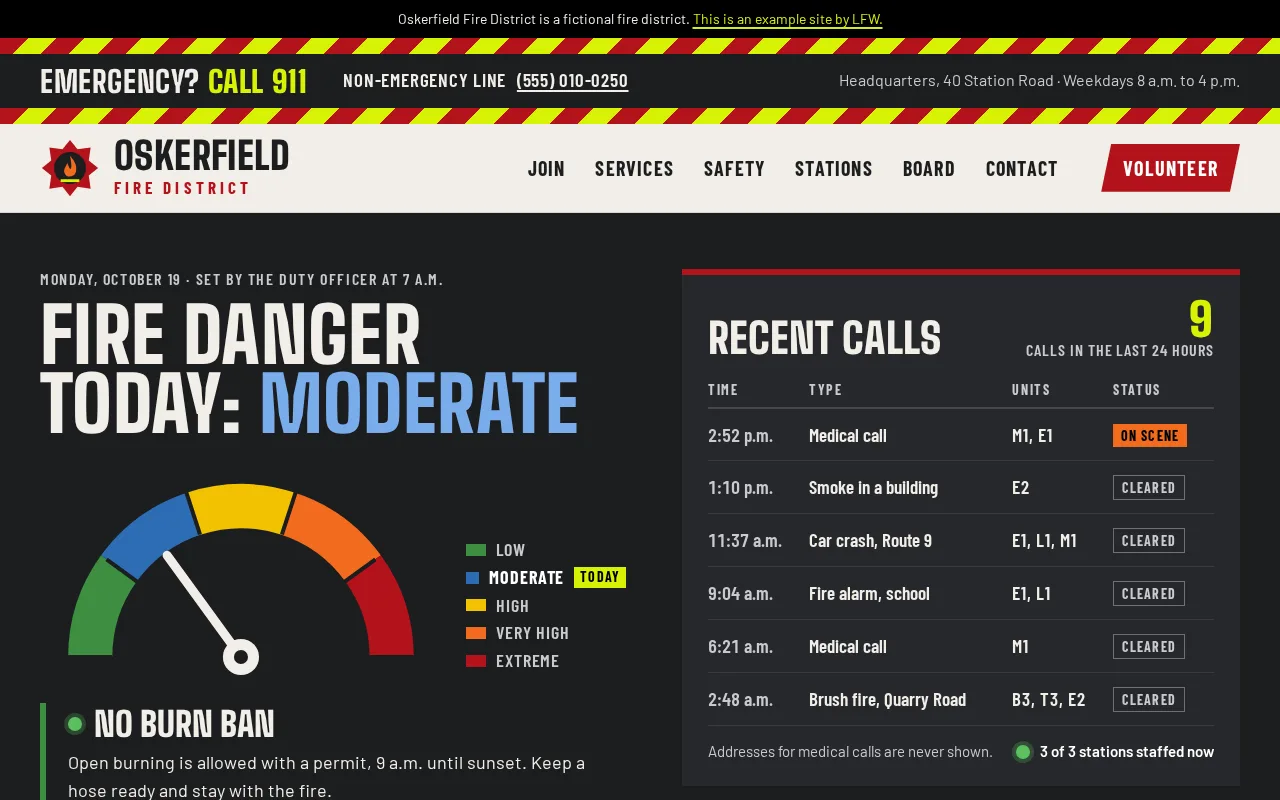
Oskerfield Fire District is fictional, an example site by LFW.
What residents come to do.
On an ordinary day the site recruits volunteers and issues permits. On a bad day it is where every alert points.
Emergency alerts
Sign-up for text, email and voice alerts, and the incident page every alert points to.
Burn permits and fire danger
Today’s burn status and fire danger, the permit form and the rules for open burning.
Reports and records
Incident and EMS report requests, with what to include, the fee and how long it takes.
Evacuation zones and shelters
Find your zone by address, open shelters, pet rules and what to bring.
Volunteer and career openings
Firefighter, EMT and CERT openings with requirements, the junior program and an interest form.
Smoke alarms and inspections
Free smoke alarm installs, CPR classes and fire inspection scheduling.
What the law expects.
The rules that shape this kind of site, each linked to its source. We read them before we build, and your counsel has the last word.
-
ADA Title II web rule
State and local government websites must meet WCAG 2.1 Level AA, special districts included, and so must the documents posted on them.
- Public entities with a total population of 50,000 or more.
- Smaller public entities and special district governments.
Dates from the Department of Justice’s interim final rule of April 20, 2026 (Federal Register 2026-07663).
-
Open meetings
A public board posts notice and an agenda before it meets. Each state’s open-meetings law sets how far ahead and where, and the rules differ by state.
Source: Open Government Guide, Reporters Committee for Freedom of the Press
The example sites.
Fictional, built by LFW, with the tasks above on its homepage.
-
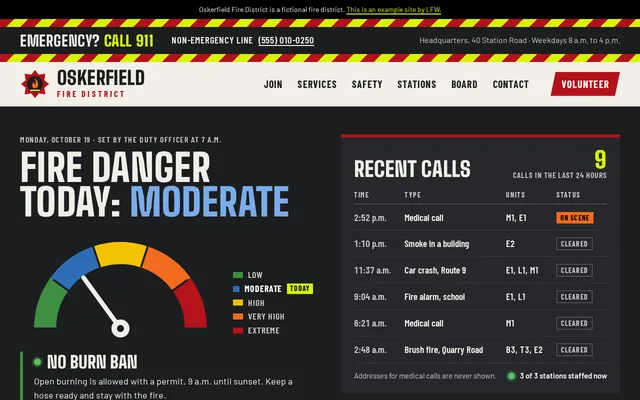
Oskerfield Fire District
Volunteer, reports, burn permits. Larger screenshot of Oskerfield Fire District -
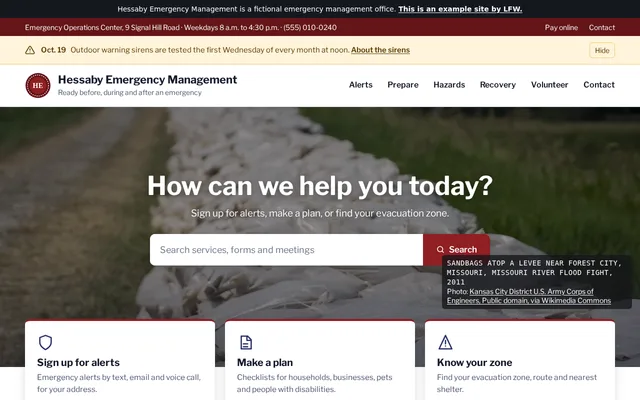
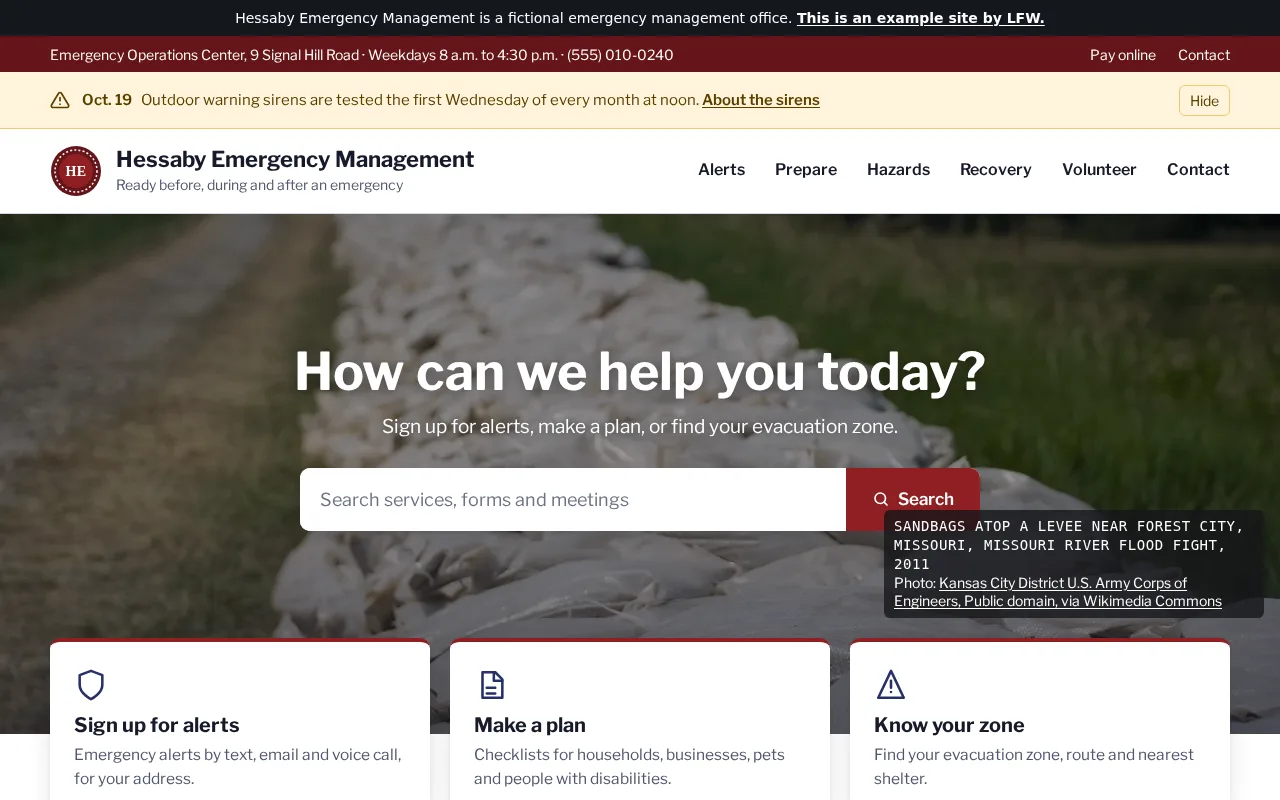
Hessaby Emergency Management
Alerts, make a plan, evacuation zones. Larger screenshot of Hessaby Emergency Management
Built in.
LFW’s plugins for WordPress, free as each is released, chosen for what this kind of site does.
-
LFW Forms
Built, not public yet
Burn permits, report requests and smoke alarm installs, each sent to the desk that handles it.
-
LFW Events Calendar
Built, not public yet
CPR classes, open houses and commission meetings, with a calendar feed.
-
LFW Multilingual
Built, not public yet
Evacuation and shelter pages in the languages your residents speak.
-
LFW Activity Logger
Built, not public yet
A record of who posted or changed an alert, and when.
Courses for your staff.
Free in LFW Academy, self-paced. No account needed to start.
- Public information officers Emergency Notices on Your Website About 90 minutes, in six lessons ending in a drill.
- Every firefighter, EMT and volunteer Cyber Basics for Public Service About an hour, in eight short lessons.
- Whoever holds the alert and social media logins Shared Accounts and Offboarding About 90 minutes, in six lessons with tasks on your own accounts.
- Whoever writes preparedness pages Writing for Residents About 45 minutes, in six short lessons.
Moving your fire district off a platform.
What the agreements say about renewal, notice and your data, and what moving takes, step by step.
What it costs.
Prices are the same for every kind of public institution.
Care, $250 a month
Updates and security patches, off-site backups, uptime checked every minute and broken links found daily. Cancel any time.
A site you made, kept
A site you make yourself in your browser is already built, so there is no setup fee: Care starts the month you keep it.
Projects, at a fixed price
An accessibility audit and fix plan is $3,500; a district rebuild is $9,500. Larger scopes and RFPs are quoted in writing.
Make a site for your fire district, then keep it.
Make one in your browser and look around first. When you want to keep it, all we need is your email.
Check your inbox. If the address can receive mail, a link is on its way.