Meta
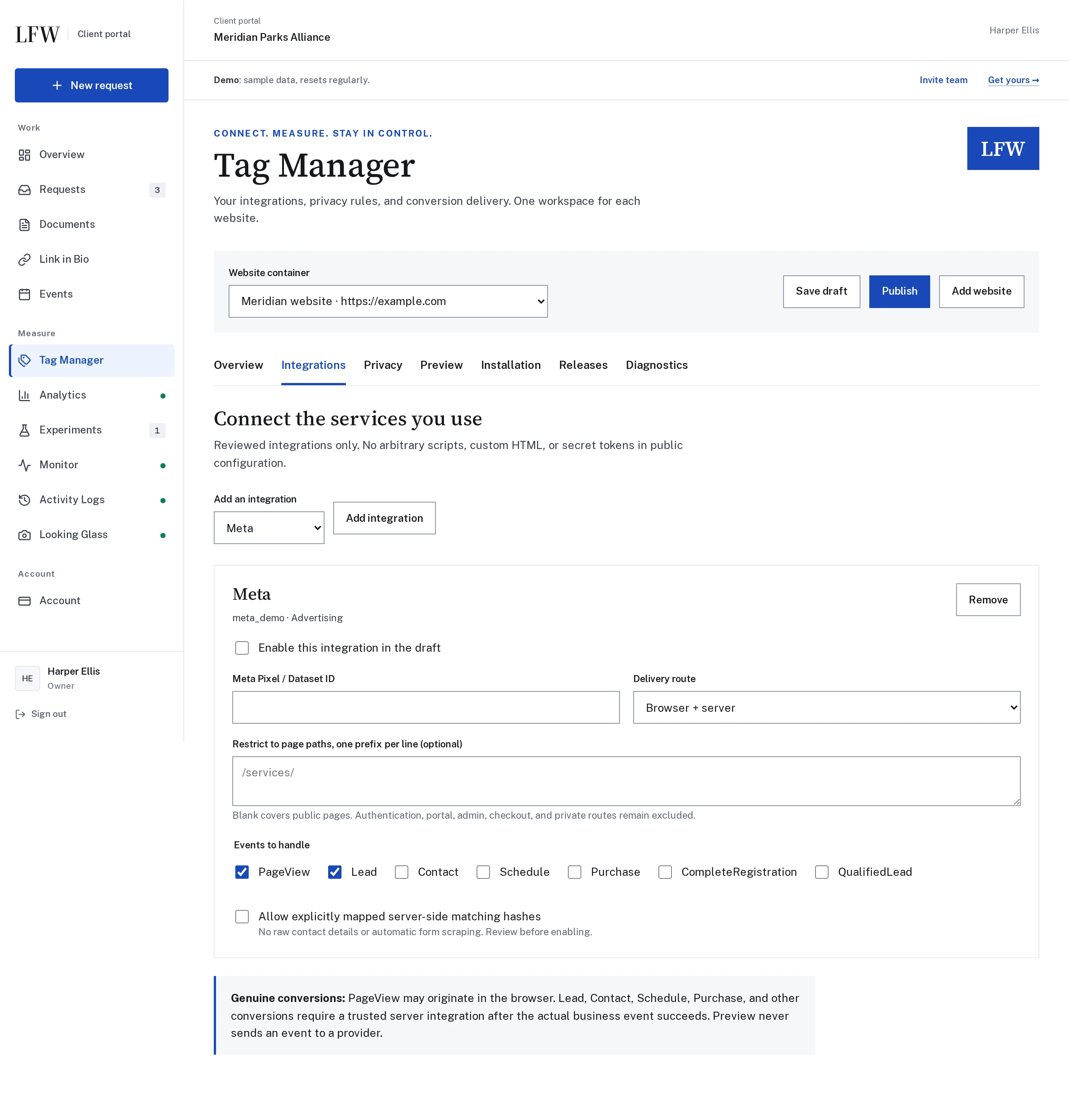
Browser pixel and Conversions API delivery, with shared event IDs for deduplication and explicitly approved server-side matching fields.
How we work · First-party measurement
Connect your advertising tools. Understand what gets sent. Keep control of the whole journey.
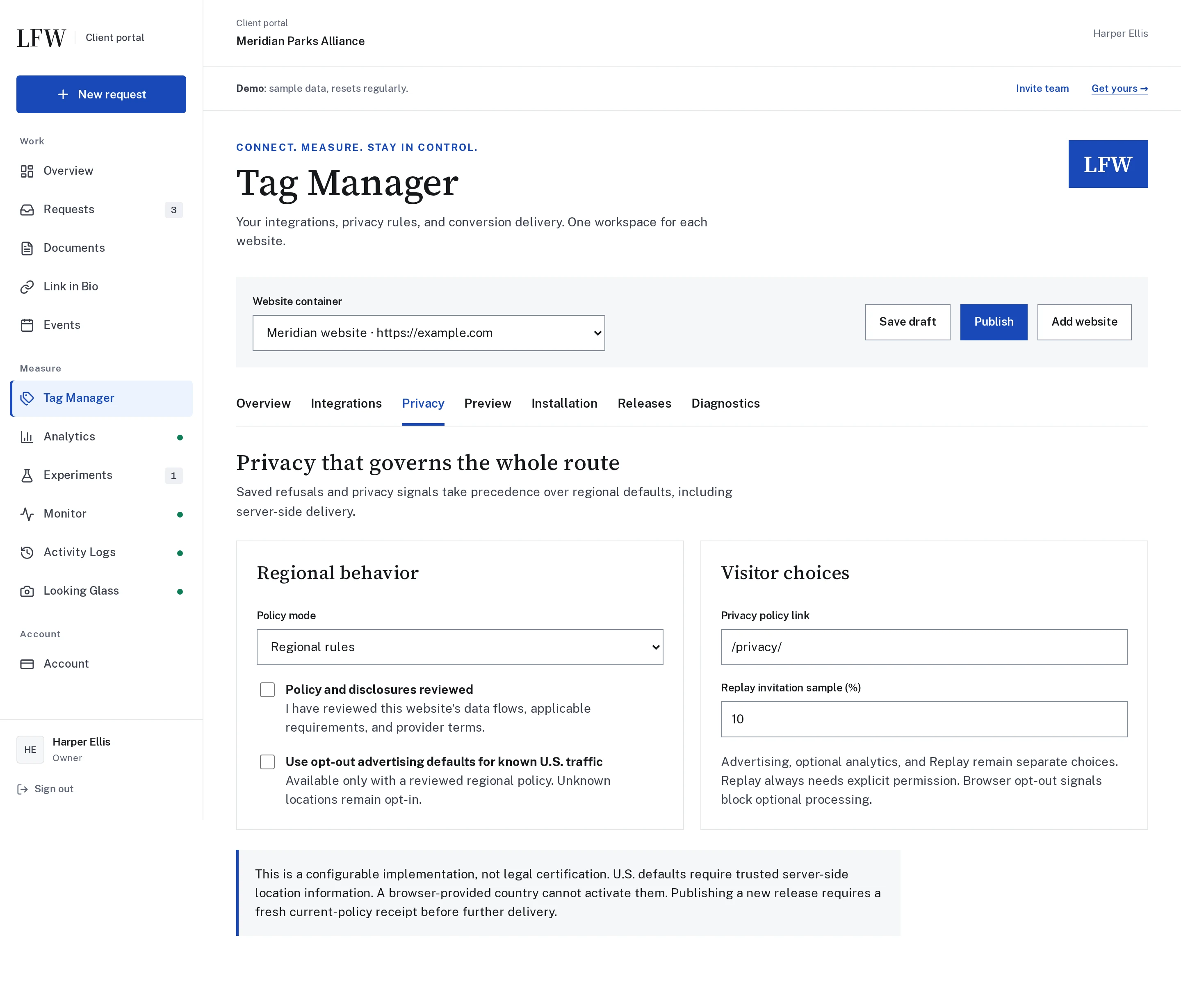
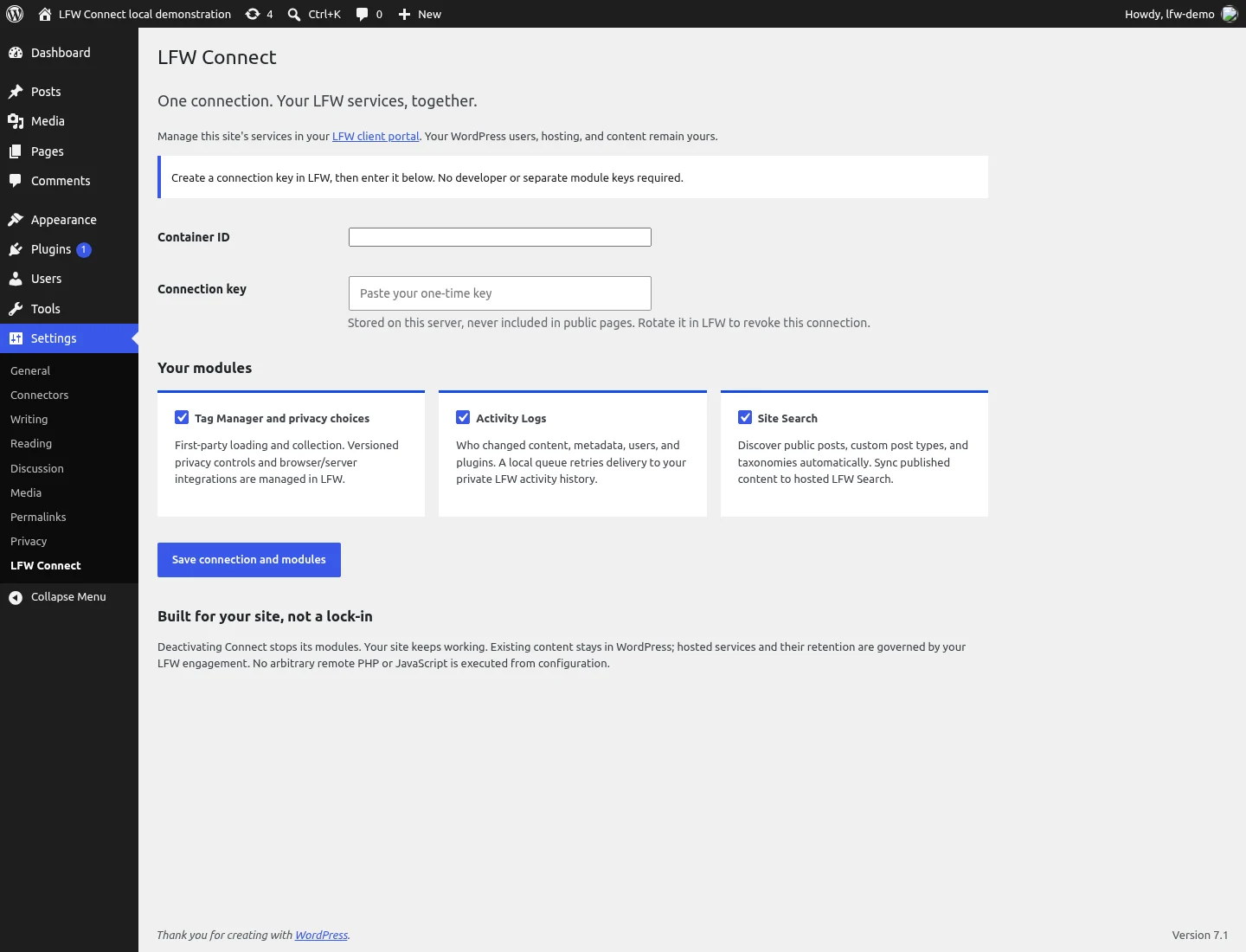
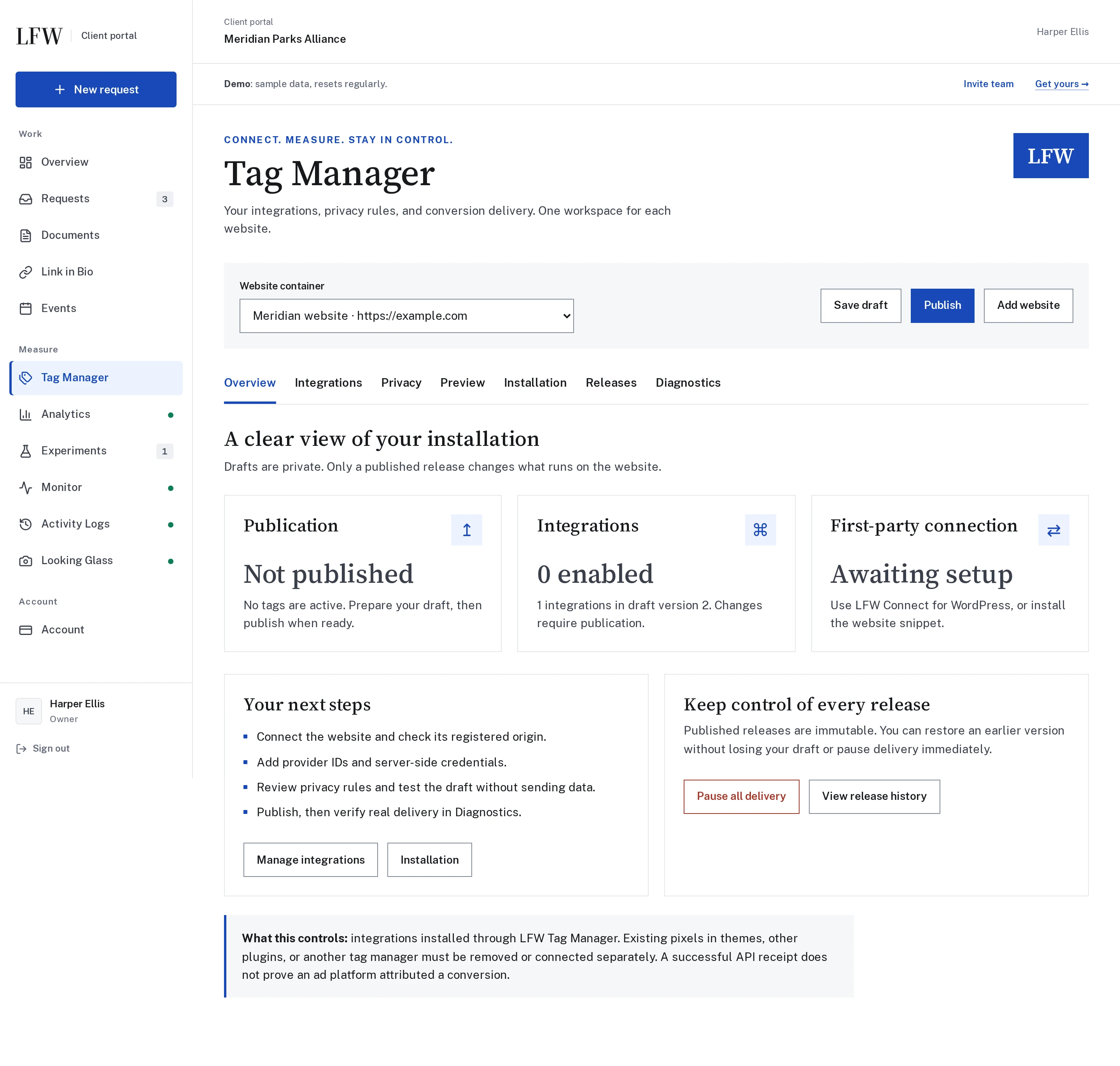
The working client portal and WordPress connection, with phone and desktop views. These screenshots use fictional demonstration data; advertising accounts are not connected.

Enlarge to view the full screenshot.

Enlarge to view the full screenshot.

Enlarge to view the full screenshot.

Enlarge to view the full screenshot.
A small runtime and collection layer on your WordPress site, with hosted configuration and delivery.
Privacy choices govern browser tags, conversion routing, and queued server-side delivery.
Drafts, previews, published versions, rollbacks, and delivery diagnostics in the same workspace.
From a pixel to a complete system
A pixel ID pasted into a website is not a measurement strategy. You need to know which events count, when information may be sent, who changed the configuration, and whether the receiving platform accepted it.
LFW Tag Manager brings those decisions into the Client Portal. Your team can prepare changes without touching a theme file. An owner or LFW administrator reviews and publishes them. A previous release can be restored, and delivery can be paused.
Request a quote for your websiteBrowser and server, working together
Browser pixel and Conversions API delivery, with shared event IDs for deduplication and explicitly approved server-side matching fields.
Insight Tag and Conversions API routing with conversion rules, first-party advertising identifiers, and delivery diagnostics.
Browser conversion tags or server-side conversion uploads, with account credentials and defined conversion actions. Each conversion uses a deliberate route to avoid double counting.
Map accepted leads, completed purchases, and confirmed business events. A spam submission or a clicked button is not automatically treated as a successful conversion.
One WordPress connection
The connector serves the LFW runtime from your website, synchronizes signed published settings, and exposes same-origin event and privacy endpoints. The connection key stays on the server.
Modules can be enabled independently. The hosted configuration lives in your Client Portal; LFW manages its own installation and customer workspaces through a separately authenticated admin interface.
Built-in control
A provider accepting an event does not prove campaign attribution. We verify the receiving account as part of setup, including its test tools and reporting expectations.
Before you connect
For the integrations supported here, yes. LFW Tag Manager has its own runtime, settings, publication history, and server-side delivery. Google Tag Manager, Stape, and Matomo are not required dependencies. Existing hard-coded tags need to be inventoried and removed or connected before migration.
No. The LFW runtime and WordPress collection endpoints can load from your own website. Provider browser libraries and requests may still use Meta, LinkedIn, or Google domains and may be blocked. Server-side conversion reporting is an additional, permission-aware route, not a way around a refusal or browser privacy signal.
The workspace supports reviewed regional rules and a stricter opt-in mode. Where configured and appropriate, trusted U.S. location information can support opt-out advertising defaults. Unknown locations fall back to opt-in. Saved refusals and browser opt-out signals take precedence. Replay has a separate explicit choice.
The relevant destination IDs, approved server credentials, conversion definitions, and an agreed privacy policy. Credentials stay encrypted on the server. Platform approval, account access, and a verified test event are required before we describe a destination as connected. Adding an integration card alone does not activate an advertising account.
No. LFW Connect installs one WordPress connection with independent Tag Manager, Activity Logs, and Search modules. Existing standalone LFW connectors can be retired after the corresponding modules are enabled. Your content stays in WordPress, and the main settings stay in your LFW workspace.
You keep your website, advertising accounts, content, and business data. Container configuration can be exported without secrets, and removing the connector stops its modules. Continued hosted delivery, data retention, and transition support are agreed in your quote and engagement, not assumed to continue after cancellation.
Twenty minutes, no sales pressure. Or start with the free audit and get a real first pass on your site today.